Wednesday, November 11, 2009
World Public Gives China, US Low Marks on Climate Change: Hu Jin Tao, Obama Prepare to Talk Together
 Go to Printer Friendly Version...
  Email to a friend...
As Hu Jin Tao, Obama Prepare to Meet, World Public Gives China, US Low Marks on Climate Change
November 11, 2009 With President Barack Obama on his way to meet his Chinese counterpart in Beijing for talks on global climate change and a range of other issues, a poll by WorldPublicOpinion.org shows that publics in more than half of 20 nations disapprove of the way China and the United States are dealing with global warming.
(Photos: Pete Souza/White House Photo, Office of the Prime Minister of the United Kingdom)
The poll asked respondents to grade China and the US on several dimensions. China gets poor marks for how it handles human rights--on average 52% say China does not respect human rights while just 36% say it does. The US does better, with 50% saying it is respectful and 38% it is not.
 People around the world regard both superpowers as cooperative, but they also see both countries, especially the US, as using the threat of military force to coerce other nations.
 Obama and Chinese President Hu Jintao are expected to focus on climate change, economic concerns, and nuclear issues related to Iran and North Korea when they meet Nov. 16 and 17. The climate change question is of particular importance in the run-up to December's conference in Copenhagen, where 192 countries will attempt to conclude a new treaty on climate change. All eyes will be on China, the world's leading emitter of greenhouse gases, and the United States, which long held that distinction.
The WPO poll, conducted during April and May, finds that people in 11 nations disapprove of how [China] is "dealing with the issue of climate change." Clear majorities in six nations -- France (74%), Britain (73%), Germany (72%), the United States (69%), South Korea (69%), and Egypt (58%) -- are disapproving, along with pluralities is five other nations. Only in Pakistan (93%), Nigeria (69%), Kenya (64%), and Indonesia (55%) do majorities approve.
Likewise, majorities in six nations disapprove of the US handling of global warming--Egypt (68%), Britain (65%), France (62%), Pakistan 62%), Turkey (56%), and Germany (56%) --, as do pluralities in five. Nigeria, Kenya, South Korea, India and Indonesia are the only countries where majorities express approval.
 Across the 20 nations polled, approval of China's record on climate change is somewhat lower than for the US. On average, 34% approve of China (42% disapprove) while 39% approve of the US (41% disapprove).
 WorldPublicOpinion.org conducted the poll of 20,349 respondents in 20 nations that comprise 63 percent of the world's population. This includes most of the largest nations--China, India, the United States, Indonesia, Nigeria, and Russia--as well as Mexico, Chile, Germany, Great Britain, France, Poland, Ukraine, Kenya, Azerbaijan, Egypt, Turkey, Iraq, Pakistan, and South Korea. Polling was also conducted in Taiwan, Hong Kong and Macau. Not all questions were asked to all nations. The margins of error range from +/-3 to 4 percentage points. The surveys were conducted across the different nations between April 4 and July 9, 2009.
WorldPublicOpinion.org, a collaborative project involving research centers from around the world, is managed by the Program on International Policy Attitudes (PIPA) at the University of Maryland.
Throughout the poll, some groups of countries consistently favored one superpower and were critical of the other. Most notably, people in most Muslim countries gave China positive ratings and the US negative ratings. Among European countries, the US tended to rate high and China low. Kenya and Nigeria hold consistently positive views of the two superpowers, and Turkey has consistently negative views of both.
China and the United States are both seen as cooperative. Asked "if you think each is or is not generally cooperative with other countries," an average of 59% responded positively with regard to the US, and 53% for China.
On a nation-by-nation basis, the US is judged cooperative by 15 nations and not cooperative by four nations. China is seen as cooperative by eleven nations and uncooperative by seven.
At the same time many nations see these big powers as using "the threat of military force to gain advantages." This is especially true of the US: all nations polled, including the US itself, sees the US this way--on average 77%.
Views of China are less sharp: on average 46% say China does the same, while 41% say it does not. Ten nations say China uses military threats, eight say it does not. Among its neighbors majorities see China as threatening in South Korea (75%), and India (54%) and views are divided in Indonesia.
 An area in which people around the world judge China considerably more harshly than the United States is respect for human rights. Majorities in nine countries say China does not respect human rights -- especially France (88%), Germany (88%), South Korea (87%), the US (86%), Britain (86%), and Poland (80%). However, seven, say China does respect human rights: especially Pakistan (91%), Nigeria (77%), and Kenya (67%).
The United States respects human rights in the view of 12 nations, especially. Majorities who disagreed were found in 6 nations, especially the Muslim nations of Pakistan (79%), Turkey (70%), Egypt (68%), and Iraq (60%), but also Mexico (61%).
Asked overall whether China or the US "is playing a mainly positive or negative role in the world" views are mixed. On average the split is dead even for the US, with 40% of respondents overall seeing a positive role and an identical number seeing a negative one. The overall positive response for China is higher, 44%, but still short of a majority, while 34% respond negatively.
Only in Kenya, Nigeria and South Korea do clear majorities say that both China and the US play a positive role in the world. A Majority in Turkey sees both superpowers playing negative roles.
Despite tense relations, Taiwanese views of China are not as negative one might expect. Large majorities believe China uses the threat of military force to gain advantages (70%) and does not respect human rights (76%). However slightly more than half (51%) say that China is playing a mostly positive role in the world. The same number agrees that China is mostly cooperative with other countries in the international arena.
Publics in China's special administrative regions of Hong Kong and Macau have very favorable views of Chinese policies. Overwhelmingly majorities agree that China is playing a mainly positive role in the world (81% Hong Kong, 81% Macau) and that China usually cooperates with other countries (85% Hong Kong, 89% Macau). Roughly two-thirds of both publics reject any notion that China uses its military power to intimidate other countries (68% Hong Kong, 69% Macau). A slight majority in Macau (51%) and a plurality in Hong Kong (45%) support China's actions in combating climate change.
The exception is on human rights. A large majority in Hong Kong (62%) say China is not respectful of human rights while views in Macau are mixed with many declining to answer.
Funding for this research was provided by the Rockefeller Brothers Fund and the Calvert Foundation.
Share article on:Funding for this research was provided by the Rockefeller Brothers Fund and the Calvert Foundation.

 Facebook


 Go to Printer Friendly Version... Email to a friend...
Labels: China, Chinese, climate, climate disruption, diplomacy, environment, international, Obama


Saturday, October 10, 2009
30 Scientists Accuse Tufts Researchers of Ethical Violations-- Nuremberg Code
30 Scientists Accuse Tufts Researchers of Ethical Violations-- Nuremberg Code
ALLIANCE FOR HUMAN RESEARCH PROTECTION
A Catalyst for Public Debate: Promoting Openness, Full Disclosure, and Accountability
http://www.ahrp.org
FYI
A report in the business forum, Zikkir, "Out of Sight" was prompted by the publicity surrounding the $79 million settlement of Pfizer's unethical Trovan experiment conducted on Nigerian infants.
http://www.ahrp.org/cms/content/view/571/72/.
The Zikkir article touches on the problems related to the US pharmaceutical industry's increased outsourcing of clinical trials to off-shore locations, mostly in underdeveloped countries including Eastern Europe and Russia which do not conform to ethical restraints mandated by the Nuremberg Code or the Declaration of Helsinki. http://zikkir.com/business/6259?wscr=1024x768.
An in-depth report by the Institute of Science in Society, "The Golden Rice
Scandal Unfolds," demonstrates that academics who are shielded by the US
government seal of approval, have been conducting medical experiments that
are clearly prohibited by the Nuremberg Code. The article focuses on a
series of recent unethical Phase II trials conducted by Tufts University
researchers, who tested genetically modified "Golden Rice' (GR2) on children
in the U.S. exposing them to "an unapproved experimental genetically
modified rice enhanced in pro-Vitamin A that has the potential to cause
birth defects and developmental abnormalities."
The questionable experiments-which ISIS described as "an exercise in how not to do science"--are:
1. Project NCT 00680355.(10) Bioavailability of Golden Rice Carotenoids in Humans.
http://clinicaltrials.gov/ct2/show/record/NCT00680355?term=golden
2. Project NCT 00082420. Retinol Equivalence of Plant Carotenoids in Children.
http://clinicaltrials.gov/archive/NCT00082420
The experiment compared the vitamin A value of b-carotene in oil capsule, spinach and Golden Rice - recruited 72 children 7 to 9 years of age. The starting date of the experiment was September 2004, it ended November 2005.
3. Project NCT 00680212. Vitamin A Equivalence of Plant Carotenoids in Children.
http://clinicaltrials.gov/ct2/show/record/NCT00680212?term=golden
In this experiment, researchers recruited 72 children 6 to 8 years of age and registered start and finish dates July 2008 and January 2009.
The ISIS report (submitted to the FDA in March, 2009) states:
"The Golden Rice Project website [6] (accessed 17 March 2009), stated that "Golden Rice has gone through many tests since it was first obtained" Nine items are listed; but no feeding trial on animals among them." See: http://www.i-sis.org.uk/goldenRiceScandal.php
"Golden Rice" has been touted as a humanitarian effort to resolve vitamin A deficiency. However, it has met with significant opposition from environmental and anti-globalization activists who view it as a commercial threat.
For example, Dr. Vandana Shiva called it "a hoax:"
"Unfortunately, Vitamin A rice is a hoax, and will bring further dispute to plant genetic engineering where public relations exercises seem to have replaced science in promotion of untested, unproven and unnecessary technology."
"The problem is that vitamin A rice will not remove vitamin A deficiency (VAD). It will seriously aggravate it. It is a technology that fails in its promise.
Since the daily average requirement of vitamin A is 750 micrograms of vitamin A and 1 serving contains 30g of rice according to dry weight basis, vitamin A rice would only provide 9.9 micrograms which is 1.32% of the required allowance. Even taking the 100g figure of daily consumption of rice used in the technology transfer paper would only provide 4.4% of the RDA."
"In order to meet the full needs of 750 micrograms of vitamin A from rice, an adult would have to consume 2 kg 272g of rice per day. This implies that one family member would consume the entire family ration of 10 kg. from the PDS in 4 days to meet vitaminA needs through "Golden rice".
"This is a recipe for creating hunger and malnutrition, not solving it."
"Even the World Bank has admitted that rediscovering and use of local plants and conservation of vitamin A rich green leafy vegetables and fruits have dramatically reduced VAD threatened children over the past 20 years in very cheap and efficient ways."
See: THE "GOLDEN RICE" HOAX -When Public Relations replaces Science
http://online.sfsu.edu/~rone/GEessays/goldenricehoax.html
The ISIS report calls the Tufts experiments "morally inexcusable:"
"The phase II clinical trials of uncharacterized, unapproved, experimental GR2 events on children, some of whom may indeed be suffering from vitamin A deficiency, is morally inexcusable. GR2 has not been assessed for safety, and there are reasons to suspect it is unsafe."
See: http://www.i-sis.org.uk/goldenRiceScandal.php
In February, 2009, an open letter addressed to Professor Robert Russell, Professor Emeritus, Friedman School of Nutrition Science and Policy, Tufts University School of Medicine (Email: rob.russell@tufts.edu) was signed by 30 senior scientists who protested the unethical testing of a possibly hazardous substance--"Golden Rice" (GR2) in children.
The letter states that the trials
"appear to be an experimental collection of transgenic events still in the laboratory, uncharacterized in terms of basic molecular genetics or biological and biochemical properties, not tested pre-clinically on animals, or subjected to any other safety assessment."
"The variety of Golden Rice used in these experiments (GR2) is inadequately described in terms of biological and biochemical characterization. anywhere else in the publicly available literature, and has woefully inadequate pre-clinical evaluation."
" It is a genetically modified product which has not been shown to be distinctive, uniform and stable over time. It has never been through a regulatory /approvals process anywhere in the world. There is now a large body of evidence that shows that GM crop/food production is highly prone to inadvertent and unpredictable pleiotropic effects, which can result in health damaging effects when GM food products are fed to animals (for reviews see Pusztai and Bardocz , 2006; Schubert, 2008; Dona and
Arvanitoyannis, 2009)."
"More specifically, our greatest concern is that this rice, which is engineered to overproduce beta carotene, has never been tested in animals, and there is an extensive medical literature showing that retinoids that can be derived from beta carotene are both toxic and cause birth defects."
No results have been made available for either of the pediatric studies (as of 17 March 2009).
The scientists noted that the three Tufts Projects breached the Nuremberg Code / medical ethics code "on a number of counts, and we urge you to call them to a halt immediately."
"They should not be resumed unless and until the researchers can demonstrate that a full range of laboratory and animal feeding trials have been completed and published for the Golden Rice strain being used, and unless and until appropriate regulatory bodies have had an opportunity to come to a view on the health and safety issues about which we are very concerned."
"We can assure you that such trials would not have been approved within the European Union in the absence of safety information, which highlights yet again the flaw of the USDA and FDA regulatory system in considering GM crops/foods as hypothetically "generally recognised as safe - GRAS" in the
absence of hard experimental data."
Further underscoring the U.S. academics' and government agency disregard for medical ethics, the ISIS report notes that an Indian newspaper reported that a clinical trial was cut short in China in July 2008, when the government found that 24 children 6-8 years of age at a primary school in Henyan, Hunan, were to be used as guinea pigs for a trial with Golden Rice."
That trial was also sponsored by Tufts University and approved by the US National Institute of Health--though not from the Chinese government, which was alerted by Greenpeace. Greenpeace has also warned the governments of Bangladesh, India, Indonesia, Philippines and Vietnam against the risky trials.
It would appear that the Chinese government conforms to higher medical ethics standards than the US National Institute of Health.
So, why has the media failed to pay any attention to these morally deplorable human experiments on American children ?
Contact: Vera Hassner Sharav
veracare@ahrp.org
212-595-8974
http://www.i-sis.org.uk/goldenRiceScandal.php
ISIS Report 18/03/09
The Golden Rice Scandal Unfolds
Phase II clinical trials on children have been conducted with unapproved experimental GM rice enhanced in pro-Vitamin A that has the potential to cause birth defects and developmental abnormalities Dr. Mae-Wan Ho and Prof. Joe Cummins
This report has been sent to the United States Food and Drug Administration on behalf of ISIS
Clinical trials of unapproved, uncharacterized GM rice on children
EXCERPT:
According to a recent report [9], a sample of the Golden Rice grains was sent to Germany in 2001 for a feeding trial with mice. But when the grains were tested for carotenoid content, the scientists were "surprised to find it contained less than one percent of the amount expected." After the rice was cooked, this was reduced by another 50 percent, so the trial was abandoned.
In 2005, Syngenta made GR2 [10] using the maize version of the enzyme phytoene synthase that was transferred from daffodil. GR2 produced up to 23 times the amount of carotenoids in the original Golden Rice, GR1.
But GR2 was not a transgenic variety based on a single transformation event. On the contrary, it was explicitly stated that [10]: "The reported transgenic rice events [emphasis added] are experimental." There is no telling whether all the children or adults taking part in any of the trials
were given Golden Rice from the same GR2 event. The results of the trials, as yet unreleased, could well be utterly worthless.
Syngenta was donating these GR2 events, via the Humanitarian Project for Golden Rice, for further research and development (to institutes across China, India, Philippines, Indonesia, Bangladesh and Vietnam) "through license under certain conditions", which include "being governed by the
strategic direction of the Golden Rice Humanitarian Board" Requests were to be directed to Adrian Dubock, a previous employee of Syngenta.
Dubock helped Potrykus and Beyer work out a deal in which Syngenta could develop Golden Rice commercially, but farmers in developing countries who make less than US$10 000 a year could get it for free [5]. Dubock retired from Syngenta in 2007, but remains a member of the Golden Rice Humanitarian Board, chaired by Potykus.
Golden Rice, an exercise in how not to do science
Golden Rice, genetically modified to make pro-vitamin A in the endosperm (the grain remaining after polishing), was announced with great fanfare in 2000 as a cure for widespread vitamin A deficiency in developing countries.
The project had already cost US$100 million, funded by the Rockefeller Foundation, the Swiss Federal Institute of Technology, the European Community Biotech Programme and the Swiss Federal Office for Education and Science, and could cost as much again to develop. It was tied up in at least 70 patent claims on genes, DNA sequences and constructs, a problem only partly solved in the "ground-breaking deal" worked out by Dubock (see above)..
Condemnation was swift and widespread, not least because it was absurd to offer Golden Rice as the cure for vitamin A deficiency when there are plenty of alternative, infinitely cheaper sources of vitamin A or pro-Vitamin A, such as green vegetables and unpolished coloured rice (especially black and purple varieties [11], which would be rich in other essential vitamins and minerals, and hence much more nutritious. The UN Food and Agricultural Organization (FAO) started a project in 1985 to deal with vitamin A deficiency using a combination of food fortification, food supplements and general improvements in diets by encouraging people to grow and eat a variety of green leafy vegetables. One main discovery from the project was that the absorption of pro-vitamin A depends on the overall nutritional status, which in turn depends on the diversity of the food consumed [12].
The main cause of hunger and malnutrition in the Third World is the industrial monocultures of the Green Revolution, which obliterated agricultural biodiversity and soil fertility, resulting in ever-worsening mineral and micronutrient deficiencies in our food. Golden Rice, like other GM crops, is industrial monoculture only worse, and will exacerbate this trend, as well as the destruction of agricultural land, and the impoverishment of family farmers that also accompanied the Green Revolution [13] (see Beware the New "Doubly Green Revolution", SiS 37).
GR1 was made with the standard 'first generation' genetic modification techniques, using GM constructs that cause uncontrollable mutations and other collateral damage to the host plant genome, with many unintended, uncharacterized effects [14]. In addition, the viral and bacterial sequences, including antibiotic resistance marker genes, in the construct and in the vectors created for gene transfer enhance horizontal gene transfer and recombination, the main route to creating new pathogens and spreading antibiotic resistance.
GR2 represents an improvement in so far as antibiotic resistance markers were no longer used, but still includes a medley combination of sequences\ from plant pathogens Agrobacterium (used in a binary vector system) and Erwinia uredovor, and from E. coli, inhabitant of the human gut, which also contains pathogenic strains. We have highlighted the special hazards of the Agrobacterium vector system since 2003 [15] (Agrobacterium & Morgellons Disease, A GM Connection?, SiS 38) (see below). The main reason for Golden Rice was revealed in the unusually long news feature article [16] accompanying the scientific publication [8] which stated: "One can only hope that this application of plant genetic engineering to ameliorate human misery without regard to short-term profit will restore this technology to political acceptability."
A detailed audit on the project [14] (The 'Golden Rice', An Exercise in How Not to Do Science, ISIS Report) uncovered "fundamental deficiencies" from the scientific and social rationale to the science and technology involved. It was being promoted "to salvage a morally as well as financially bankrupt agricultural biotech industry." The situation has changed little since.
The phase II clinical trials of uncharacterized, unapproved, experimental GR2 events on children, some of whom may indeed be suffering from vitamin A deficiency, is morally inexcusable. GR2 has not been assessed for safety, and there are reasons to suspect it is unsafe. GMO safety in question
The biotech industry has consistently found genetically modified food and feed 'as safe as their conventional counterparts', and regulators in the United States and European Union have accepted this assertion overwhelmingly based on studies carried out and interpreted by the industry [17] (GM Food Nightmare Unfolding in the Regulatory Sham, ISIS scientific publication).
There is now a string of evidence that exposure of many species of animals to a variety of genetically modified crops, and food and feed derived from them, can cause illnesses and death, raising the distinct possibility that genetic modification is inherently dangerous [18] (GM is Dangerous and Futile, SiS 40). This is reinforced in results obtained in the most recent studies.
....
Golden Rice particularly dangerous
In addition, the unbalanced enhancement of single nutrients in GM crops may do more harm than good [27] (GM Crops and Microbes for Health or Public Health Hazards? SiS 32). As David Schubert at the Salk Institute for Biological Sciences La Jolla, California, in the United States points out [28], plants possess the ability to synthesize between 90,000 and 200,000 nonessential small molecules, with up to 500 in one species. The enormous repertoire is due in part to enzymes with very low substrate specificity, which are unpredictably altered by mutations and pleiotropic effects associated with GM technology. Furthermore, overdose of many single nutrients are known to be toxic, vitamin A being a case in point. Schubert highlights the toxic effects of retinoic acid and other metabolites of b-carotene, only a few of them can be identified and measured in the current state of technology.
Golden Rice is enhanced in b-carotene, which on ingestion, is cleaved in half to generate retinal for use in the visual cycle. Retinal is also reduced to retinol, or oxidized to retinoic acid (RA), which interacts with highly specific nuclear receptors. Essentially all of the biological activity of retinoids, apart from vision, involves RA. While high concentrations of retinol are toxic, RA is biologically active at concentrations several orders of magnitude lower than retinol. Hence, Schubert states [28]: "excess RA or RA derivatives are exceedingly dangerous, particularly to infants and during pregnancy." RA is required for the development of the nervous system, both by directly controlling nerve differentiation and by generating concentration gradients that direct cell migration, embryonic segmentation, and development. Therefore, RA and synthetic derivative of RA are teratogenic (able to cause birth defects). They can accumulate in fat and plasma, becoming a risk factor for pregnancy for up to 2 years following ingestion, and multiple low doses of retinoids have greater toxicity than a single high dose.
Because of the type of biological functions controlled by low levels of RA, any perturbation of its signalling pathways by plant-derived RA receptor agonists or antagonists will have clinical consequences. "Could the GM modifications used to enhance b-carotene synthesis create such compounds?"
(This question remains unanswered to this day.) Six hundred naturally occurring compounds exist in the carotene family, and at least 60 can be precursors to retinoids. "Therefore, plants have the potential to make many potentially harmful retinoid-like compounds when there are increased levels of synthetic intermediates to b-carotene as in golden rice."
While all retinoids and derivatives are likely to be teratogenic, good assays and information regarding the behaviour and teralogic activity are available for only three: retinol, RA, and retinal. Therefore, at the very least, "extensive safety testing should be required before the introduction of golden rice as a food."
See complete ISIS report with copious references at:
http://www.i-sis.org.uk/goldenRiceScandal.php
FAIR USE NOTICE: This may contain copyrighted (C ) material the use of which has not always been specifically authorized by the copyright owner. Such material is made available for educational purposes, to advance understanding of human rights, democracy, scientific, moral, ethical, and social justice issues, etc. It is believed that this constitutes a 'fair use' of any such copyrighted material as provided for in Title 17 U.S.C. section 107 of the US Copyright Law. This material is distributed without profit.
ALLIANCE FOR HUMAN RESEARCH PROTECTION
A Catalyst for Public Debate: Promoting Openness, Full Disclosure, and Accountability
http://www.ahrp.org
FYI
A report in the business forum, Zikkir, "Out of Sight" was prompted by the publicity surrounding the $79 million settlement of Pfizer's unethical Trovan experiment conducted on Nigerian infants.
http://www.ahrp.org/cms/content/view/571/72/.
The Zikkir article touches on the problems related to the US pharmaceutical industry's increased outsourcing of clinical trials to off-shore locations, mostly in underdeveloped countries including Eastern Europe and Russia which do not conform to ethical restraints mandated by the Nuremberg Code or the Declaration of Helsinki. http://zikkir.com/business/6259?wscr=1024x768.
An in-depth report by the Institute of Science in Society, "The Golden Rice
Scandal Unfolds," demonstrates that academics who are shielded by the US
government seal of approval, have been conducting medical experiments that
are clearly prohibited by the Nuremberg Code. The article focuses on a
series of recent unethical Phase II trials conducted by Tufts University
researchers, who tested genetically modified "Golden Rice' (GR2) on children
in the U.S. exposing them to "an unapproved experimental genetically
modified rice enhanced in pro-Vitamin A that has the potential to cause
birth defects and developmental abnormalities."
The questionable experiments-which ISIS described as "an exercise in how not to do science"--are:
1. Project NCT 00680355.(10) Bioavailability of Golden Rice Carotenoids in Humans.
http://clinicaltrials.gov/ct2/show/record/NCT00680355?term=golden
2. Project NCT 00082420. Retinol Equivalence of Plant Carotenoids in Children.
http://clinicaltrials.gov/archive/NCT00082420
The experiment compared the vitamin A value of b-carotene in oil capsule, spinach and Golden Rice - recruited 72 children 7 to 9 years of age. The starting date of the experiment was September 2004, it ended November 2005.
3. Project NCT 00680212. Vitamin A Equivalence of Plant Carotenoids in Children.
http://clinicaltrials.gov/ct2/show/record/NCT00680212?term=golden
In this experiment, researchers recruited 72 children 6 to 8 years of age and registered start and finish dates July 2008 and January 2009.
The ISIS report (submitted to the FDA in March, 2009) states:
"The Golden Rice Project website [6] (accessed 17 March 2009), stated that "Golden Rice has gone through many tests since it was first obtained" Nine items are listed; but no feeding trial on animals among them." See: http://www.i-sis.org.uk/goldenRiceScandal.php
"Golden Rice" has been touted as a humanitarian effort to resolve vitamin A deficiency. However, it has met with significant opposition from environmental and anti-globalization activists who view it as a commercial threat.
For example, Dr. Vandana Shiva called it "a hoax:"
"Unfortunately, Vitamin A rice is a hoax, and will bring further dispute to plant genetic engineering where public relations exercises seem to have replaced science in promotion of untested, unproven and unnecessary technology."
"The problem is that vitamin A rice will not remove vitamin A deficiency (VAD). It will seriously aggravate it. It is a technology that fails in its promise.
Since the daily average requirement of vitamin A is 750 micrograms of vitamin A and 1 serving contains 30g of rice according to dry weight basis, vitamin A rice would only provide 9.9 micrograms which is 1.32% of the required allowance. Even taking the 100g figure of daily consumption of rice used in the technology transfer paper would only provide 4.4% of the RDA."
"In order to meet the full needs of 750 micrograms of vitamin A from rice, an adult would have to consume 2 kg 272g of rice per day. This implies that one family member would consume the entire family ration of 10 kg. from the PDS in 4 days to meet vitaminA needs through "Golden rice".
"This is a recipe for creating hunger and malnutrition, not solving it."
"Even the World Bank has admitted that rediscovering and use of local plants and conservation of vitamin A rich green leafy vegetables and fruits have dramatically reduced VAD threatened children over the past 20 years in very cheap and efficient ways."
See: THE "GOLDEN RICE" HOAX -When Public Relations replaces Science
http://online.sfsu.edu/~rone/GEessays/goldenricehoax.html
The ISIS report calls the Tufts experiments "morally inexcusable:"
"The phase II clinical trials of uncharacterized, unapproved, experimental GR2 events on children, some of whom may indeed be suffering from vitamin A deficiency, is morally inexcusable. GR2 has not been assessed for safety, and there are reasons to suspect it is unsafe."
See: http://www.i-sis.org.uk/goldenRiceScandal.php
In February, 2009, an open letter addressed to Professor Robert Russell, Professor Emeritus, Friedman School of Nutrition Science and Policy, Tufts University School of Medicine (Email: rob.russell@tufts.edu) was signed by 30 senior scientists who protested the unethical testing of a possibly hazardous substance--"Golden Rice" (GR2) in children.
The letter states that the trials
"appear to be an experimental collection of transgenic events still in the laboratory, uncharacterized in terms of basic molecular genetics or biological and biochemical properties, not tested pre-clinically on animals, or subjected to any other safety assessment."
"The variety of Golden Rice used in these experiments (GR2) is inadequately described in terms of biological and biochemical characterization. anywhere else in the publicly available literature, and has woefully inadequate pre-clinical evaluation."
" It is a genetically modified product which has not been shown to be distinctive, uniform and stable over time. It has never been through a regulatory /approvals process anywhere in the world. There is now a large body of evidence that shows that GM crop/food production is highly prone to inadvertent and unpredictable pleiotropic effects, which can result in health damaging effects when GM food products are fed to animals (for reviews see Pusztai and Bardocz , 2006; Schubert, 2008; Dona and
Arvanitoyannis, 2009)."
"More specifically, our greatest concern is that this rice, which is engineered to overproduce beta carotene, has never been tested in animals, and there is an extensive medical literature showing that retinoids that can be derived from beta carotene are both toxic and cause birth defects."
No results have been made available for either of the pediatric studies (as of 17 March 2009).
The scientists noted that the three Tufts Projects breached the Nuremberg Code / medical ethics code "on a number of counts, and we urge you to call them to a halt immediately."
"They should not be resumed unless and until the researchers can demonstrate that a full range of laboratory and animal feeding trials have been completed and published for the Golden Rice strain being used, and unless and until appropriate regulatory bodies have had an opportunity to come to a view on the health and safety issues about which we are very concerned."
"We can assure you that such trials would not have been approved within the European Union in the absence of safety information, which highlights yet again the flaw of the USDA and FDA regulatory system in considering GM crops/foods as hypothetically "generally recognised as safe - GRAS" in the
absence of hard experimental data."
Further underscoring the U.S. academics' and government agency disregard for medical ethics, the ISIS report notes that an Indian newspaper reported that a clinical trial was cut short in China in July 2008, when the government found that 24 children 6-8 years of age at a primary school in Henyan, Hunan, were to be used as guinea pigs for a trial with Golden Rice."
That trial was also sponsored by Tufts University and approved by the US National Institute of Health--though not from the Chinese government, which was alerted by Greenpeace. Greenpeace has also warned the governments of Bangladesh, India, Indonesia, Philippines and Vietnam against the risky trials.
It would appear that the Chinese government conforms to higher medical ethics standards than the US National Institute of Health.
So, why has the media failed to pay any attention to these morally deplorable human experiments on American children ?
Contact: Vera Hassner Sharav
veracare@ahrp.org
212-595-8974
http://www.i-sis.org.uk/goldenRiceScandal.php
ISIS Report 18/03/09
The Golden Rice Scandal Unfolds
Phase II clinical trials on children have been conducted with unapproved experimental GM rice enhanced in pro-Vitamin A that has the potential to cause birth defects and developmental abnormalities Dr. Mae-Wan Ho and Prof. Joe Cummins
This report has been sent to the United States Food and Drug Administration on behalf of ISIS
Clinical trials of unapproved, uncharacterized GM rice on children
EXCERPT:
According to a recent report [9], a sample of the Golden Rice grains was sent to Germany in 2001 for a feeding trial with mice. But when the grains were tested for carotenoid content, the scientists were "surprised to find it contained less than one percent of the amount expected." After the rice was cooked, this was reduced by another 50 percent, so the trial was abandoned.
In 2005, Syngenta made GR2 [10] using the maize version of the enzyme phytoene synthase that was transferred from daffodil. GR2 produced up to 23 times the amount of carotenoids in the original Golden Rice, GR1.
But GR2 was not a transgenic variety based on a single transformation event. On the contrary, it was explicitly stated that [10]: "The reported transgenic rice events [emphasis added] are experimental." There is no telling whether all the children or adults taking part in any of the trials
were given Golden Rice from the same GR2 event. The results of the trials, as yet unreleased, could well be utterly worthless.
Syngenta was donating these GR2 events, via the Humanitarian Project for Golden Rice, for further research and development (to institutes across China, India, Philippines, Indonesia, Bangladesh and Vietnam) "through license under certain conditions", which include "being governed by the
strategic direction of the Golden Rice Humanitarian Board" Requests were to be directed to Adrian Dubock, a previous employee of Syngenta.
Dubock helped Potrykus and Beyer work out a deal in which Syngenta could develop Golden Rice commercially, but farmers in developing countries who make less than US$10 000 a year could get it for free [5]. Dubock retired from Syngenta in 2007, but remains a member of the Golden Rice Humanitarian Board, chaired by Potykus.
Golden Rice, an exercise in how not to do science
Golden Rice, genetically modified to make pro-vitamin A in the endosperm (the grain remaining after polishing), was announced with great fanfare in 2000 as a cure for widespread vitamin A deficiency in developing countries.
The project had already cost US$100 million, funded by the Rockefeller Foundation, the Swiss Federal Institute of Technology, the European Community Biotech Programme and the Swiss Federal Office for Education and Science, and could cost as much again to develop. It was tied up in at least 70 patent claims on genes, DNA sequences and constructs, a problem only partly solved in the "ground-breaking deal" worked out by Dubock (see above)..
Condemnation was swift and widespread, not least because it was absurd to offer Golden Rice as the cure for vitamin A deficiency when there are plenty of alternative, infinitely cheaper sources of vitamin A or pro-Vitamin A, such as green vegetables and unpolished coloured rice (especially black and purple varieties [11], which would be rich in other essential vitamins and minerals, and hence much more nutritious. The UN Food and Agricultural Organization (FAO) started a project in 1985 to deal with vitamin A deficiency using a combination of food fortification, food supplements and general improvements in diets by encouraging people to grow and eat a variety of green leafy vegetables. One main discovery from the project was that the absorption of pro-vitamin A depends on the overall nutritional status, which in turn depends on the diversity of the food consumed [12].
The main cause of hunger and malnutrition in the Third World is the industrial monocultures of the Green Revolution, which obliterated agricultural biodiversity and soil fertility, resulting in ever-worsening mineral and micronutrient deficiencies in our food. Golden Rice, like other GM crops, is industrial monoculture only worse, and will exacerbate this trend, as well as the destruction of agricultural land, and the impoverishment of family farmers that also accompanied the Green Revolution [13] (see Beware the New "Doubly Green Revolution", SiS 37).
GR1 was made with the standard 'first generation' genetic modification techniques, using GM constructs that cause uncontrollable mutations and other collateral damage to the host plant genome, with many unintended, uncharacterized effects [14]. In addition, the viral and bacterial sequences, including antibiotic resistance marker genes, in the construct and in the vectors created for gene transfer enhance horizontal gene transfer and recombination, the main route to creating new pathogens and spreading antibiotic resistance.
GR2 represents an improvement in so far as antibiotic resistance markers were no longer used, but still includes a medley combination of sequences\ from plant pathogens Agrobacterium (used in a binary vector system) and Erwinia uredovor, and from E. coli, inhabitant of the human gut, which also contains pathogenic strains. We have highlighted the special hazards of the Agrobacterium vector system since 2003 [15] (Agrobacterium & Morgellons Disease, A GM Connection?, SiS 38) (see below). The main reason for Golden Rice was revealed in the unusually long news feature article [16] accompanying the scientific publication [8] which stated: "One can only hope that this application of plant genetic engineering to ameliorate human misery without regard to short-term profit will restore this technology to political acceptability."
A detailed audit on the project [14] (The 'Golden Rice', An Exercise in How Not to Do Science, ISIS Report) uncovered "fundamental deficiencies" from the scientific and social rationale to the science and technology involved. It was being promoted "to salvage a morally as well as financially bankrupt agricultural biotech industry." The situation has changed little since.
The phase II clinical trials of uncharacterized, unapproved, experimental GR2 events on children, some of whom may indeed be suffering from vitamin A deficiency, is morally inexcusable. GR2 has not been assessed for safety, and there are reasons to suspect it is unsafe. GMO safety in question
The biotech industry has consistently found genetically modified food and feed 'as safe as their conventional counterparts', and regulators in the United States and European Union have accepted this assertion overwhelmingly based on studies carried out and interpreted by the industry [17] (GM Food Nightmare Unfolding in the Regulatory Sham, ISIS scientific publication).
There is now a string of evidence that exposure of many species of animals to a variety of genetically modified crops, and food and feed derived from them, can cause illnesses and death, raising the distinct possibility that genetic modification is inherently dangerous [18] (GM is Dangerous and Futile, SiS 40). This is reinforced in results obtained in the most recent studies.
....
Golden Rice particularly dangerous
In addition, the unbalanced enhancement of single nutrients in GM crops may do more harm than good [27] (GM Crops and Microbes for Health or Public Health Hazards? SiS 32). As David Schubert at the Salk Institute for Biological Sciences La Jolla, California, in the United States points out [28], plants possess the ability to synthesize between 90,000 and 200,000 nonessential small molecules, with up to 500 in one species. The enormous repertoire is due in part to enzymes with very low substrate specificity, which are unpredictably altered by mutations and pleiotropic effects associated with GM technology. Furthermore, overdose of many single nutrients are known to be toxic, vitamin A being a case in point. Schubert highlights the toxic effects of retinoic acid and other metabolites of b-carotene, only a few of them can be identified and measured in the current state of technology.
Golden Rice is enhanced in b-carotene, which on ingestion, is cleaved in half to generate retinal for use in the visual cycle. Retinal is also reduced to retinol, or oxidized to retinoic acid (RA), which interacts with highly specific nuclear receptors. Essentially all of the biological activity of retinoids, apart from vision, involves RA. While high concentrations of retinol are toxic, RA is biologically active at concentrations several orders of magnitude lower than retinol. Hence, Schubert states [28]: "excess RA or RA derivatives are exceedingly dangerous, particularly to infants and during pregnancy." RA is required for the development of the nervous system, both by directly controlling nerve differentiation and by generating concentration gradients that direct cell migration, embryonic segmentation, and development. Therefore, RA and synthetic derivative of RA are teratogenic (able to cause birth defects). They can accumulate in fat and plasma, becoming a risk factor for pregnancy for up to 2 years following ingestion, and multiple low doses of retinoids have greater toxicity than a single high dose.
Because of the type of biological functions controlled by low levels of RA, any perturbation of its signalling pathways by plant-derived RA receptor agonists or antagonists will have clinical consequences. "Could the GM modifications used to enhance b-carotene synthesis create such compounds?"
(This question remains unanswered to this day.) Six hundred naturally occurring compounds exist in the carotene family, and at least 60 can be precursors to retinoids. "Therefore, plants have the potential to make many potentially harmful retinoid-like compounds when there are increased levels of synthetic intermediates to b-carotene as in golden rice."
While all retinoids and derivatives are likely to be teratogenic, good assays and information regarding the behaviour and teralogic activity are available for only three: retinol, RA, and retinal. Therefore, at the very least, "extensive safety testing should be required before the introduction of golden rice as a food."
See complete ISIS report with copious references at:
http://www.i-sis.org.uk/goldenRiceScandal.php
FAIR USE NOTICE: This may contain copyrighted (C ) material the use of which has not always been specifically authorized by the copyright owner. Such material is made available for educational purposes, to advance understanding of human rights, democracy, scientific, moral, ethical, and social justice issues, etc. It is believed that this constitutes a 'fair use' of any such copyrighted material as provided for in Title 17 U.S.C. section 107 of the US Copyright Law. This material is distributed without profit.
Labels: bioethics, Chinese, Chinese medicine, COI, ethics, medical, medicine, research, science
Saturday, September 12, 2009
Rhotic and non-rhotic accents
English pronunciation can be divided into two main accent groups: A rhotic (pronounced /ˈroʊtɨk/) speaker pronounces the letter R in hard and water. A non-rhotic speaker does not pronounce it in hard, and may not in water, or may only pronounce it in water if the following word begins with a vowel. In other words, rhotic speakers pronounce /r/ in all positions, while non-rhotic speakers pronounce /r/ only if it is followed by a vowel sound in the same phrase or prosodic unit (see "linking and intrusive R").
In linguistic terms, non-rhotic accents are said to exclude the sound [r] from the syllable coda before a consonant or prosodic break. This is commonly if misleadingly referred to as "post-vocalic R".
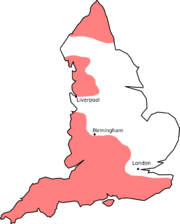
 On this map of England, the red areas are where the rural accents were rhotic as of the 1950s. Based on H. Orton et al., Survey of English dialects (1962–71). Note that some areas with partial rhoticity (for example parts of the East Riding of Yorkshire) are not shaded on this map.
  Red areas are where English dialects of the late 20th century were rhotic. Based on P. Trudgill, The Dialects of England.The earliest traces of a loss of /r/ in English are found in the environment before /s/ in spellings from the mid-15th century: the Oxford English Dictionary reports bace for earlier barse (today "bass", the fish) in 1440 and passel for parcel in 1468. In the 1630s, the word juggernaut is first attested, which represents the Sanskrit word jagannāth, meaning "lord of the universe". The English spelling uses the digraph er to represent a Hindi sound close to the English schwa. Loss of coda /r/ apparently became widespread in southern England during the 18th century; John Walker uses the spelling ar to indicate the broad A of aunt in his 1775 dictionary and reports that card is pronounced "caad" in 1791 (Labov, Ash, and Boberg 2006: 47).
Non-rhotic speakers pronounce an /r/ in red, and most pronounce it in torrid and watery, where R is followed by a vowel, but not in hard, nor in car or water when those words are said in isolation. However, in most non-rhotic accents, if a word ending in written "r" is followed closely by a word beginning with a vowel, the /r/ is pronounced—as in water ice. This phenomenon is referred to as "linking R". Many non-rhotic speakers also insert epenthetic /r/s between vowels when the first vowel is one that can occur before syllable-final r (drawring for drawing). This so-called "intrusive R" has been stigmatized, but even speakers of so-called Received Pronunciation frequently "intrude" an epenthetic /r/ at word boundaries, especially where one or both vowels is schwa; for example the idea of it becomes the idea-r-of it, Australia and New Zealand becomes Australia-r-and New Zealand. The typical alternative used by RP speakers is to insert a glottal stop where an intrusive R would otherwise be placed.[1]
For non-rhotic speakers, what was historically a vowel plus /r/ is now usually realized as a long vowel. So in Received Pronunciation (RP) and many other non-rhotic accents card, fern, born are pronounced [kɑːd], [fɜːn], [bɔːn] or something similar; the pronunciations vary from accent to accent. This length may be retained in phrases, so while car pronounced in isolation is [kɑː], car owner is [kɑːɹəʊnə]. But a final schwa usually remains short, so water in isolation is [wɔːtə]. In RP and similar accents the vowels /iː/ and /uː/ (or /ʊ/), when followed by r, become diphthongs ending in schwa, so near is [nɪə] and poor is [pʊə], though these have other realizations as well, including monophthongal ones; once again, the pronunciations vary from accent to accent. The same happens to diphthongs followed by R, though these may be considered to end in /ər/ in rhotic speech, and it is the /ər/ that reduces to schwa as usual in non-rhotic speech: tire said in isolation is [taɪə] and sour is [saʊə].[2] For some speakers, some long vowels alternate with a diphthong ending in schwa, so wear may be [wɛə] but wearing [wɛːɹiŋ].
Some phonetic mergers are characteristic of non-rhotic accents. These usually include one item that historically contained an R (lost in the non-rhotic accent), and one that never did so. The section below lists mergers in order of approximately decreasing prevalence.
Examples of rhotic accents are: Mid Ulster English, Canadian English and General American. Non-rhotic accents include Received Pronunciation, New Zealand, Australian, South African and Estuary English.
Most speakers of most of North American English are rhotic, as are speakers from Barbados, Scotland and most of Ireland.
In England, rhotic accents are found in the West Country (south and the west of a line from near Shrewsbury to around Portsmouth), the Corby area, most of Lancashire (north and east of the centre of Manchester), some parts of Yorkshire and Lincolnshire and in the areas that border Scotland. The prestige form, however, exerts a steady pressure towards non-rhoticity. Thus the urban speech of, say, Bristol or Southampton is more accurately described as variably rhotic, the degree of rhoticity being reduced as one moves up the class and formality scales.[17]
Most speakers of Indian English have a rhotic accent.[18] Other areas with rhotic accents include Otago and Southland in the far south of New Zealand's South Island, where a Scottish influence is apparent.
Areas with non-rhotic accents include Australia, most of the Caribbean, most of England (including Received Pronunciation speakers), most of New Zealand, Wales, and Singapore.
Canada is entirely rhotic except for small isolated areas in southwestern New Brunswick, parts of Newfoundland, and Lunenburg and Shelburne Counties, Nova Scotia.
In the United States, much of the South was once non-rhotic, but in recent decades non-rhotic speech has declined. Today, non-rhoticity in Southern American English is found primarily among older speakers, and only in some areas such as New Orleans (where it is known as the Yat dialect), southern Alabama, Savannah, Georgia, and Norfolk, Virginia. [19] Parts of New England, especially Boston, are non-rhotic as well as New York City and surrounding areas. The case of New York is especially interesting because of a classic study in sociolinguistics by William Labov showing that the non-rhotic accent is associated with older and middle- to lower-class speakers, and is being replaced by the rhotic accent. African American Vernacular English (AAVE) is largely non-rhotic.
There are a few accents of Southern American English where intervocalic /r/ is deleted before an unstressed syllable and at the end of a word even when the following word begins with a vowel. In such accents, pronunciations like [kæəlaːnə] for Carolina and [bɛːʌp] for "bear up" are heard.[20] These pronunciations also occur in AAVE.[21]
In Asia, India[18] and the Philippines have rhotic dialects. In the case of the Philippines, this may be explained because the English that is spoken there is heavily influenced by the American dialect. In addition, many East Asians (in China, Japan, and Korea) who have a good command of English generally have rhotic accents because of the influence of American English.
 This article contains Chinese text. Without proper rendering support, you may see question marks, boxes, or other symbols instead of Chinese characters. The rhotic consonant is dropped or vocalized under similar conditions in other Germanic languages, notably German, Danish and some dialects of southern Sweden (possibly because of its proximity to Denmark). In most varieties of German, /r/ in the syllable coda is frequently realized as a vowel or a semivowel, [ɐ] or [ɐ̯], especially in the unstressed ending -er and after long vowels: for example sehr [zeːɐ̯], besser [ˈbɛsɐ]. Similarly, Danish /r/ after a vowel is, unless preceded by a stressed vowel, either pronounced [ɐ̯] (mor "mother" [moɐ̯ˀ], næring "nourishment" [ˈnɛɐ̯eŋ]) or merged with the preceding vowel while usually influencing its vowel quality (/a(ː)r/ and /ɔːr/ or /ɔr/ are realised as long vowels [aː] and [ɒː], and /ər/, /rə/ and /rər/ are all pronounced [ɐ]) (løber "runner" [ˈløːb̥ɐ], Søren Kierkegaard (personal name) [ˌsœːɐn ˈkʰiɐ̯ɡ̊əˌɡ̊ɒːˀ]).
Among the Turkic languages, Uyghur displays more or less the same feature, as syllable-final /r/ is dropped, while the preceding vowel is lengthened: for example Uyghurlar [ʔʊɪˈʁʊːlaː] ‘Uyghurs’. The /r/ may, however, sometimes be pronounced in unusually "careful" or "pedantic" speech; in such cases, it is often mistakenly inserted after long vowels even when there is no phonemic /r/ there.
In standard Khmer the final /r/ is unpronounced. If an /r/ occurs as the second consonant of a cluster in a minor syllable, it is also unpronounced. The informal speech of Phnom Penh has gone a step further, dropping the /r/ when it occurs as the second consonant of a cluster in a major syllable while leaving behind a dipping tone. When an /r/ occurs as the initial of a syllable, it becomes uvular in contrasts to the trilled /r/ in standard speech.
Similarly in Yaqui, an indigenous language of northern Mexico, intervocalic or syllable-final /r/ is often dropped with lengthening of the previous vowel: pariseo becomes [paːˈseo], sewaro becomes [sewajo].
In some dialects of Brazilian Portuguese, word-final /r/ is unpronounced or becomes simply an aspiration (mostly in the interior of Minas Gerais, São Paulo, Paraná and Mato Grosso do Sul states), while in Thai, pre-consonantal /r/ is unpronounced.
Andalusian Spanish is the only Spanish dialect with an unpronounced word-final /r/.[citation needed]
In Mandarin, the variety of Chinese that forms the basis of the national language, coda [ɻ] is only pronounced in some areas, including Beijing, while in others it tends to be silent. 二 "two", for instance, is pronounced [ɑ̂ɻ] in rhotic areas only.
Spellings based on non-rhotic pronunciation of dialectal or foreign words can result in mispronunciations if read by rhotic speakers. In addition to juggernaut mentioned above, the following are found:

In linguistic terms, non-rhotic accents are said to exclude the sound [r] from the syllable coda before a consonant or prosodic break. This is commonly if misleadingly referred to as "post-vocalic R".
Development of non-rhotic accents


Non-rhotic speakers pronounce an /r/ in red, and most pronounce it in torrid and watery, where R is followed by a vowel, but not in hard, nor in car or water when those words are said in isolation. However, in most non-rhotic accents, if a word ending in written "r" is followed closely by a word beginning with a vowel, the /r/ is pronounced—as in water ice. This phenomenon is referred to as "linking R". Many non-rhotic speakers also insert epenthetic /r/s between vowels when the first vowel is one that can occur before syllable-final r (drawring for drawing). This so-called "intrusive R" has been stigmatized, but even speakers of so-called Received Pronunciation frequently "intrude" an epenthetic /r/ at word boundaries, especially where one or both vowels is schwa; for example the idea of it becomes the idea-r-of it, Australia and New Zealand becomes Australia-r-and New Zealand. The typical alternative used by RP speakers is to insert a glottal stop where an intrusive R would otherwise be placed.[1]
For non-rhotic speakers, what was historically a vowel plus /r/ is now usually realized as a long vowel. So in Received Pronunciation (RP) and many other non-rhotic accents card, fern, born are pronounced [kɑːd], [fɜːn], [bɔːn] or something similar; the pronunciations vary from accent to accent. This length may be retained in phrases, so while car pronounced in isolation is [kɑː], car owner is [kɑːɹəʊnə]. But a final schwa usually remains short, so water in isolation is [wɔːtə]. In RP and similar accents the vowels /iː/ and /uː/ (or /ʊ/), when followed by r, become diphthongs ending in schwa, so near is [nɪə] and poor is [pʊə], though these have other realizations as well, including monophthongal ones; once again, the pronunciations vary from accent to accent. The same happens to diphthongs followed by R, though these may be considered to end in /ər/ in rhotic speech, and it is the /ər/ that reduces to schwa as usual in non-rhotic speech: tire said in isolation is [taɪə] and sour is [saʊə].[2] For some speakers, some long vowels alternate with a diphthong ending in schwa, so wear may be [wɛə] but wearing [wɛːɹiŋ].
Mergers characteristic of non-rhotic accents
Some phonetic mergers are characteristic of non-rhotic accents. These usually include one item that historically contained an R (lost in the non-rhotic accent), and one that never did so. The section below lists mergers in order of approximately decreasing prevalence.
- panda-pander. In the terminology of Wells (1982) this consists of the merger of the lexical sets commA and lettER. It is found in all or nearly all non-rhotic accents,[3] and is even present in some accents that are in other respects rhotic, such as those of some speakers in Jamaica and the Bahamas.[3] Other possible homophones include area-airier, cheetah-cheater, cornea-cornier, formally-formerly, manna-manner/manor, rota-rotor, schema-schemer, tuba-tuber and pharma-farmer.
- father-farther In Wells's terminology, this consists of the merger of the lexical sets PALM and START. It is found in the speech of the great majority of non-rhotic speakers, including those of England, Wales, the United States, the Caribbean, Australia, New Zealand and South Africa. It may be absent in some non-rhotic speakers in the Bahamas.[3] Other possible homophones include alms-arms, balmy-barmy, lava-larva and spa-spar
- pawn-porn. In Wells's terminology, this consists of the merger of the lexical sets THOUGHT and NORTH. It is found in the same accents as the father-farther merger described above, but is absent from the Bahamas and Guyana.[3] Other possible homophones include awe-or, caulk-cork, gnaw-nor, laud-lord, stalk-stork, talk-torque, taught-tort and thaw-Thor.
- caught-court. In Wells's terminology, this consists of the merger of the lexical sets THOUGHT and FORCE. It is found in those non-rhotic accents containing the pawn-porn merger that have also undergone the horse-hoarse merger. These include the accents of Southern England, Wales, non-rhotic New York City speakers, Trinidad and the Southern hemisphere. In such accents a three-way merger awe-or-ore/oar results. Other possible homophones include bawd-board, flaw-floor, fought-fort, law-lore, paw-pour/pore, raw-roar, sauce-source, saw-sore/soar and Shaw-shore.
- calve-carve. In Wells's terminology, this consists of the merger of the lexical sets BATH and START. It is found in some non-rhotic accents with broad A in words like "bath". It is general in southern England (excluding rhotic speakers), Trinidad, the Bahamas, and the Southern hemisphere. It is a possibility for Welsh, Eastern New England, Jamaican, and Guyanese speakers. Other possible homophones include aunt-aren't, fast-farced and pass-parse.
- paw-poor. In Wells's terminology, this consists of the merger of the lexical sets THOUGHT and CURE It is found in those non-rhotic accents containing the caught-court merger that have also undergone the pour-poor merger. Wells lists it unequivocally only for the accent of Trinidad, but it is an option for non-rhotic speakers in England, Australia and New Zealand. Such speakers have a potential four-way merger taw-tor-tore-tour.[4]. Other possible homophones include Shaw-sure, tawny-tourney and yaw-your
- batted-battered. This merger is present in non-rhotic acents which have undergone the weak vowel merger. Such accents include Australian, New Zealand, most South African speech, and some non-rhotic English speech. Other possible homophones include arches-archers, chatted-chattered, founded-foundered, matted-mattered, offices-officers, sauces-saucers, splendid-splendo(u)red and tended-tendered.
- dough-door. In Wells's terminology, this consists of the merger of the lexical sets GOAT and FORCE. It may be found in some southern US non-rhotic speech, some speakers of African American Vernacular English, some speakers in Guyana and some Welsh speech.[3] Other possible homophones include coat-court, flow-floor, foe-four/fore, go-gore, hoe-whore, poach-porch, poke-pork, row-roar, show-shore, snow-snore, stow-store, toe-tore and woe-wore.
- show-sure. In Wells's terminology, this consists of the merger of the lexical sets GOAT and CURE. It may be present in those speakers who have both the dough-door merger described above, and also the pour-poor merger. These include some southern US non-rhotic speakers, some speakers of African American Vernacular English,and some speakers in Guyana.[3] Other possible homophones include Poe-poor, toe-tour, and goad-gourd
- often-orphan. In Wells's terminology, this consists of the merger of the lexical sets CLOTH and NORTH. It may be present in old-fashioned Eastern New England accents,[5], some New York speakers [6] and also in some speakers in Jamaica and Guyana. It was also present in some words in old-fashioned Received Pronunciation. Other possible homophones include moss-Morse and off-Orff.
- God-guard. In Wells's terminology, this consists of the merger of the lexical sets LOT and START. It may be present in non-rhotic accents that have undergone the father-bother merger. These may include some New York accents,[7] some southern US accents,[8] and African American Vernacular English.[9]. Other possible homophones include cod-card, hot-heart, lodge-large, pot-part, potty-party, and shop-sharp.
- shot-short. In Wells's terminology, this consists of the merger of the lexical sets LOT and NORTH. It may be present in some Eastern New England accents.[10][11]. Other possible homophones include cock-cork, cod-cord, con-corn, odder-order and stock-stork.
- oil-earl. In Wells's terminology, this consists of the merger of the lexical sets CHOICE and NURSE preconsonantally. It was present in older New York accents, but became stigmatized and is sharply recessive in those born since the Second World War.[12]. Other possible homophones include adjoin-adjourn, Boyd-bird, coil-curl, oily-early and voice-verse
Distribution of rhotic and non-rhotic accents
Examples of rhotic accents are: Mid Ulster English, Canadian English and General American. Non-rhotic accents include Received Pronunciation, New Zealand, Australian, South African and Estuary English.

In England, rhotic accents are found in the West Country (south and the west of a line from near Shrewsbury to around Portsmouth), the Corby area, most of Lancashire (north and east of the centre of Manchester), some parts of Yorkshire and Lincolnshire and in the areas that border Scotland. The prestige form, however, exerts a steady pressure towards non-rhoticity. Thus the urban speech of, say, Bristol or Southampton is more accurately described as variably rhotic, the degree of rhoticity being reduced as one moves up the class and formality scales.[17]
Most speakers of Indian English have a rhotic accent.[18] Other areas with rhotic accents include Otago and Southland in the far south of New Zealand's South Island, where a Scottish influence is apparent.
Areas with non-rhotic accents include Australia, most of the Caribbean, most of England (including Received Pronunciation speakers), most of New Zealand, Wales, and Singapore.
Canada is entirely rhotic except for small isolated areas in southwestern New Brunswick, parts of Newfoundland, and Lunenburg and Shelburne Counties, Nova Scotia.
In the United States, much of the South was once non-rhotic, but in recent decades non-rhotic speech has declined. Today, non-rhoticity in Southern American English is found primarily among older speakers, and only in some areas such as New Orleans (where it is known as the Yat dialect), southern Alabama, Savannah, Georgia, and Norfolk, Virginia. [19] Parts of New England, especially Boston, are non-rhotic as well as New York City and surrounding areas. The case of New York is especially interesting because of a classic study in sociolinguistics by William Labov showing that the non-rhotic accent is associated with older and middle- to lower-class speakers, and is being replaced by the rhotic accent. African American Vernacular English (AAVE) is largely non-rhotic.
There are a few accents of Southern American English where intervocalic /r/ is deleted before an unstressed syllable and at the end of a word even when the following word begins with a vowel. In such accents, pronunciations like [kæəlaːnə] for Carolina and [bɛːʌp] for "bear up" are heard.[20] These pronunciations also occur in AAVE.[21]
In Asia, India[18] and the Philippines have rhotic dialects. In the case of the Philippines, this may be explained because the English that is spoken there is heavily influenced by the American dialect. In addition, many East Asians (in China, Japan, and Korea) who have a good command of English generally have rhotic accents because of the influence of American English.
Similar phenomena in other languages
Among the Turkic languages, Uyghur displays more or less the same feature, as syllable-final /r/ is dropped, while the preceding vowel is lengthened: for example Uyghurlar [ʔʊɪˈʁʊːlaː] ‘Uyghurs’. The /r/ may, however, sometimes be pronounced in unusually "careful" or "pedantic" speech; in such cases, it is often mistakenly inserted after long vowels even when there is no phonemic /r/ there.
In standard Khmer the final /r/ is unpronounced. If an /r/ occurs as the second consonant of a cluster in a minor syllable, it is also unpronounced. The informal speech of Phnom Penh has gone a step further, dropping the /r/ when it occurs as the second consonant of a cluster in a major syllable while leaving behind a dipping tone. When an /r/ occurs as the initial of a syllable, it becomes uvular in contrasts to the trilled /r/ in standard speech.
Similarly in Yaqui, an indigenous language of northern Mexico, intervocalic or syllable-final /r/ is often dropped with lengthening of the previous vowel: pariseo becomes [paːˈseo], sewaro becomes [sewajo].
In some dialects of Brazilian Portuguese, word-final /r/ is unpronounced or becomes simply an aspiration (mostly in the interior of Minas Gerais, São Paulo, Paraná and Mato Grosso do Sul states), while in Thai, pre-consonantal /r/ is unpronounced.
Andalusian Spanish is the only Spanish dialect with an unpronounced word-final /r/.[citation needed]
In Mandarin, the variety of Chinese that forms the basis of the national language, coda [ɻ] is only pronounced in some areas, including Beijing, while in others it tends to be silent. 二 "two", for instance, is pronounced [ɑ̂ɻ] in rhotic areas only.
Effect on spelling
| | This article contains Chinese text. Without proper rendering support, you may see question marks, boxes, or other symbols instead of Chinese characters. |
 | This article contains Indic text. Without proper rendering support, you may see question marks or boxes, misplaced vowels or missing conjuncts instead of Indic text. |
- "Er", to indicate a filled pause, as a British spelling of what Americans would render "uh".
- The Korean family name usually written "Park" in English.
- The game Parcheesi.
- British English slang words:
- "char" for "cha" from the Mandarin Chinese pronunciation of 茶 (= "tea" (the drink))
- "nark" (= "informer") from Romany "nāk" (= "nose").
- In Rudyard Kipling's books:
- "dorg" instead of "dawg" for a drawled pronunciation of "dog".
- Hindu god name Kama misspelled as "Karma" (which refers to a concept in several Asian religions, not a god).
- Hindustani कागज़ "kāgaz" (= "paper") spelled as "kargaz".
- "Burma" and "Myanmar" for Burmese [bəmà] and [mjàmmà].
- The development of "ass" (buttocks) as a variant of arse (later standardized as US usage).
See also
References
- ^ Wells, Accents of English, 1:224.
- ^ New Shorter Oxford English Dictionary
- ^ a b c d e f Wells (1982)
- ^ Wells, p. 287
- ^ Wells, p. 524
- ^ Wells (1982), p. 503
- ^ Wells (1982), p. 504
- ^ Wells (1982), p. 544
- ^ Wells (1982), p. 577
- ^ Wells, p. 520
- ^ Dillard, Joey Lee (1980). Perspectives on American English. The Hague; New York: Walter de Gruyter. p. 53. ISBN 9027933677. http://books.google.com/books?id=6zPgjduXBcQC.
- ^ Wells (1982), pp. 508-509
- ^ Wells (1982), p. 225
- ^ Upton, Clive; Eben Upton (2004). Oxford rhyming dictionary. Oxford University Press. p. 59. ISBN 0192801155.
- ^ Upton, Clive; Eben Upton (2004). Oxford rhyming dictionary. Oxford University Press. p. 60. ISBN 0192801155.
- ^ Wakelyn, Martin: "Rural dialects in England", in: Trudgill, Peter (1984): Language in the British Isles, p.77
- ^ Trudgill, Peter (1984). Language in the British Isles. Cambridge, UK: Cambridge University Press. ISBN 0521284090, 9780521284097.
- ^ a b Wells, J. C. (1982). Accents of English 3: Beyond the British Isles. Cambridge, UK: Cambridge University Press. p. 629. ISBN 0521285410.
- ^ Labov, Ash, and Boberg, 2006: pp. 47–48.
- ^ Harris 2006: pp. 2–5.
- ^ Pollock et al., 1998.
Bibliography
- Harris, John. 2006. "Wide-domain r-effects in English"(pdf). Accessed March 24, 2007.
- Labov, William, Sharon Ash, and Charles Boberg. 2006. The Atlas of North American English. Berlin: Mouton de Gruyter. ISBN 3-11-016746-8.
- Pollock, K., et al. 1998. "Phonological Features of African American Vernacular English (AAVE)". Accessed March 24, 2007.
- Wells, J. C. Accents of English. 3 vols. Cambridge: Cambridge University Press, 1982.
Links
- Chapter 7of the Atlas of North American English by William Labov et al., dealing with rhotic and non-rhotic accents in the U.S. (PDF file)
- Rhotic vs non-rhotic, intrusive "r"from the alt.usage.english newsgroup's FAQ
- Rhotic or non-rhotic English?, Pétur Knútsson, University of Iceland
- 'Hover & Hear' accents of English from around the world, both rhotic and non-rhotic.
Labels: accent, anthropology, Chinese, grography, India, international, language, popular culture, semiotic, social science, speech

